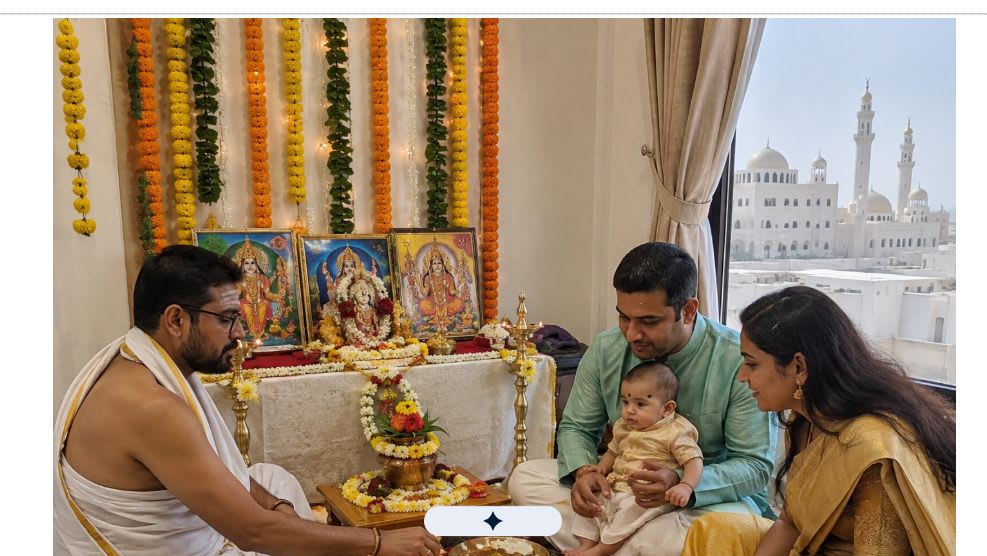
Annaprashan puja muscat in Muscat
Celebrate Your Baby’s First Rice Ceremony in Muscat with Sacred Hindu Traditions
About Annaprashan puja muscat in Muscat
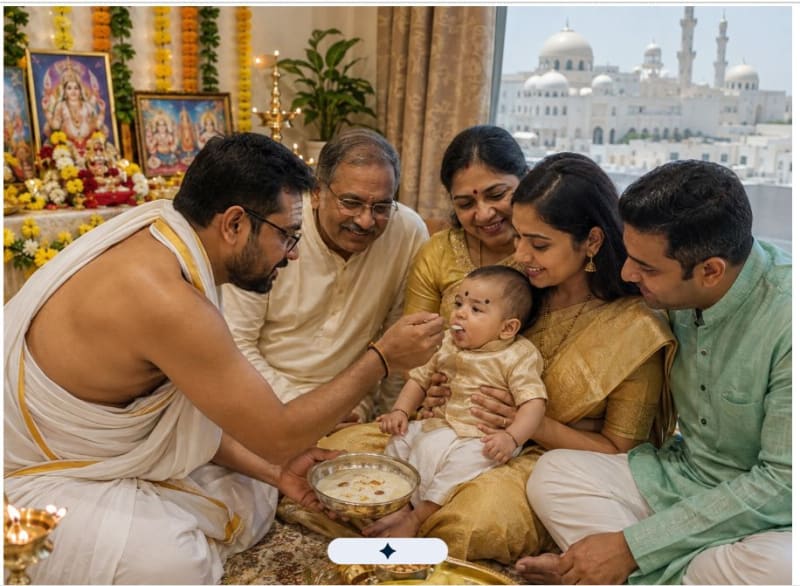
Muscat's Hindu community has been settled here for centuries, not decades, and it shows in how naturally Annaprashan fits into daily life, with temple visits, family priests, and generational customs already woven into the city rather than freshly imported. Annaprashan marks a baby's first taste of solid food, one of the sixteen shodasha samskaras, and Muscat families often have more flexibility here than in newer Gulf communities, simply because the infrastructure of temple and priest networks runs deeper. Naman Pooja arranges a verified pandit for your Muscat home, or connects you with the Shiv Mandir in Muttrah or the Krishna Temple in Darsait if your family prefers marking the day at a mandir. Samagri is handled ahead of time either way, so the focus stays on the baby and the family gathered around them.
| Topic | Details |
|---|---|
| Ceremony Name | Annaprashan Sanskar (Annaprashana) |
| What is Annaprashan? | Annaprashan is the sacred Hindu ceremony in which a baby is fed solid food for the first time, apart from the mother's milk. |
| Religious Significance | It is one of the 16 Shodasha Sanskaras mentioned in Hindu scriptures and marks an important milestone in a child's life. |
| Purpose | The ceremony symbolizes the beginning of healthy nourishment and seeks divine blessings for the child's health, strength, wisdom, prosperity, and long life. |
| Category | Recommended for Annaprashan |
| Preferred Paksha | Shukla Paksha (Waxing Moon) |
| Preferred Time | Before Noon (wherever a suitable Muhurat is available) |
| Muhurat Selection | The ceremony should ideally be performed during an auspicious Muhurat after considering Panchang and the child's birth chart (Kundali). |
| Recommended Age for Annaprashan | |
| Child | Ideal Time for Ceremony |
| Boy Child | 6th, 8th, 10th, or 12th month |
| Girl Child | 5th, 7th, 9th, or 11th month |
| Auspicious Weekdays | Auspicious Tithis |
| Monday ✅ Auspicious | Tithi |
| Wednesday ✅ Auspicious | Shukla Dwitiya ✅ Auspicious |
| Thursday ✅ Auspicious | Shukla Tritiya ✅ Auspicious |
| Friday ✅ Auspicious | Shukla Panchami ✅ Auspicious |
| Shukla Saptami ✅ Auspicious | |
| Shukla Dashami ✅ Auspicious | |
| Shukla Trayodashi ✅ Auspicious | |
| Purnima ✅ Auspicious | |
| Krishna Dwitiya ✅ Auspicious | |
| Krishna Tritiya ✅ Auspicious | |
| Krishna Panchami ✅ Auspicious | |
| Krishna Saptami ✅ Auspicious | |
| Krishna Dashami ✅ Auspicious | |
| Krishna Trayodashi ✅ Auspicious | |
| Auspicious Nakshatras | |
| Nakshatra Category | Nakshatras |
| Fixed Nakshatras | Rohini, Uttara Phalguni, Uttara Ashadha, Uttara Bhadrapada |
| Movable Nakshatras | Punarvasu, Swati, Shravana, Dhanishtha, Shatabhisha |
| Gentle & Friendly Nakshatras | Mrigashira, Chitra, Anuradha, Revati |
| Short Nakshatras | Ashwini, Pushya, Hasta |
| Auspicious Lagna | |
| Lagna | Recommendation |
| Mesha (Aries) | ❌ Not Recommended |
| Vrishchika (Scorpio) | ❌ Not Recommended |
| Meena (Pisces) | ❌ Not Recommended |
| All Other Lagnas | ✅ Auspicious |
| Kundali Considerations | |
| Astrological Factor | Recommendation |
| 10th House | No planet should occupy the 10th house during the Muhurat. |
| Moon Placement | The Moon should not be placed in the 1st, 6th, or 8th house. |
| Horoscope Matching | The final Muhurat should be selected after considering the child's Kundali and Panchang. |
| Traditional First Foods | |
| Rice Kheer | Traditional first solid food symbolizing prosperity and nourishment. |
| Honey | Represents sweetness and a blessed life. |
| Makhana (Fox Nuts) | Symbolizes purity and good health. |
| Curd (Yogurt) | Represents peace, purity, and well-being. |
| Muhurat Classification | |
| Muhurat Type | Meaning |
| ✅ Auspicious Muhurat | Highly favorable for performing Annaprashan Sanskar. |
| Mixed Muhurat | Can be used if necessary but may contain minor doshas; consult a priest. |
| Inauspicious Muhurat | Not recommended for conducting the ceremony. |
| Why Choose Naman Puja? | |
|---|---|
| Service | Description |
| Personalized Muhurat | Customized Muhurat based on the child's birth details and Panchang. |
| Experienced Vedic Pandits | Qualified priests performing authentic Vedic rituals. |
| Complete Puja Samagri | All required puja materials arranged for your convenience. |
| Ritual Guidance | Step-by-step assistance throughout the ceremony. |
| Family Blessings | A traditional and memorable celebration with loved ones. |
Rahu Kaal (Rahu Kalam) Timing to Avoid: Rahu Kaal in Muscat
Saturday, October 17, 2026
Rahu Kaal is a roughly ninety-minute daily window traditionally considered inauspicious for beginning a puja, calculated from local sunrise and sunset. Muscat's daylight hours shift only modestly through the year, but the exact window still moves day to day, so check the daily Panchang for Muscat's current Rahu Kaal before finalizing your start time.
Annaprashan at Home in Muscat
Dos and Don'ts
Nearby Temple Information
| Temple | Area | Hours |
|---|---|---|
| Shri Shiv Mandir (Motishwar Mandir) | Muttrah, Old Muscat | Generally open in an early-morning block and again in the evening; confirm current hours directly, as they vary slightly by source |
| Sri Krishna Temple | Darsait | Generally open in an early-morning block and again in the evening; confirm current hours directly, as they vary slightly by source |
Samagri and Prasad Responsibility
Frequently Asked Questions
Common queries about booking and performing this sacred ritual in Muscat.
This depends on the temple's own arrangements for private rites versus general darshan, which is worth confirming directly before planning your ceremony around a visit there.