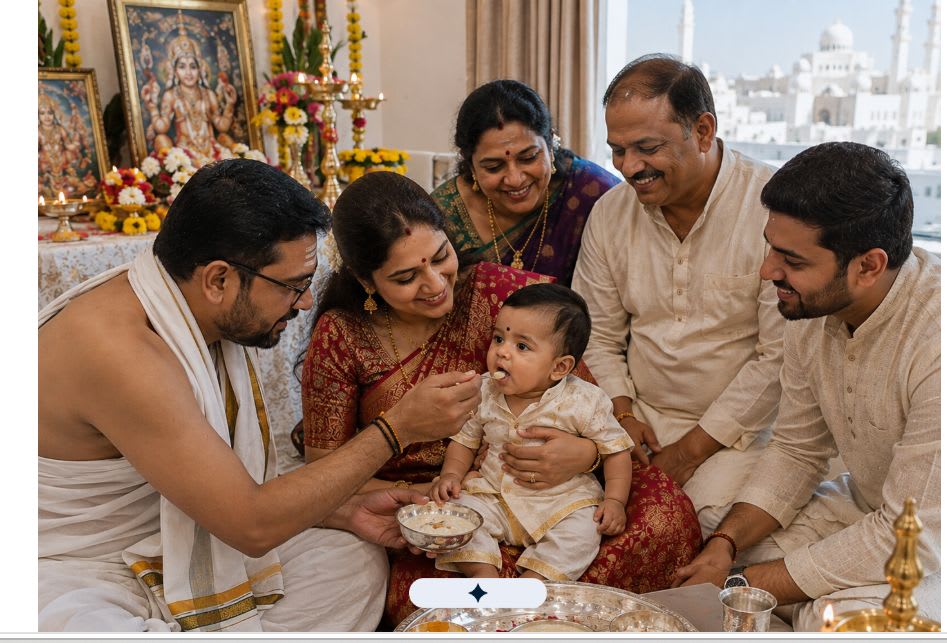
About Annaprasan puja Sohar in Sohar
Sohar's Indian community is smaller and more spread out than Muscat's, so an Annaprashan ceremony here often comes with a different question than in the capital: not "which temple" but "can we even find a priest and the right samagri locally." Annaprashan marks a baby's first taste of solid food, one of the sixteen shodasha samskaras, and it deserves an unhurried, joyful family occasion rather than a scramble around what's available in a port and industrial city. Naman Pooja arranges a verified pandit to travel to your Sohar-area home, indoors and fully self-contained with samagri brought along, or connects you with the local temple for the ceremony. Families across Sohar and the wider Al Batinah region can book either option in advance.
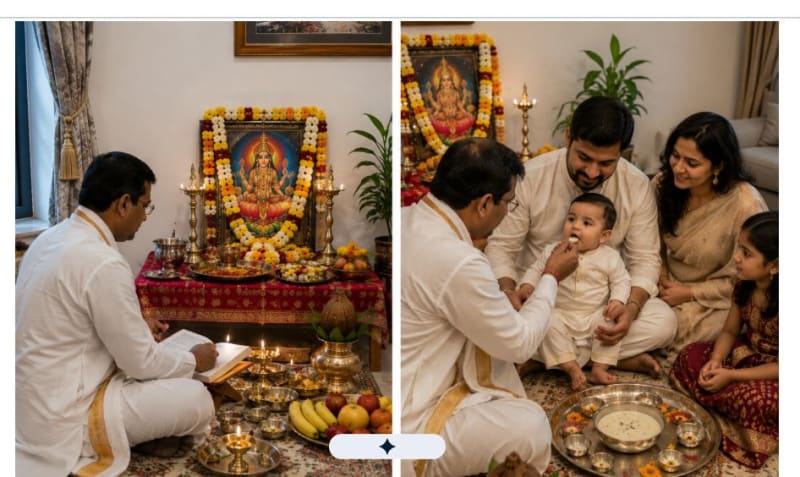
Annaprashan Puja at Home in Sohar
Dos and Don'ts
Annaprashan Muhurat Information
| Category | Details |
|---|---|
| Ceremony Purpose | Marks the baby's first solid meal and seeks divine blessings for health, happiness, prosperity, and longevity. |
| Recommended Age | Boys: 6th, 8th, 10th, or 12th month.Girls: 5th, 7th, 9th, or 11th month. |
| Preferred Paksha | Shukla Paksha (Waxing Moon). |
| Preferred Time | Before noon, during an auspicious Muhurat. |
| Auspicious Weekdays | Monday, Wednesday, Thursday, and Friday. |
| Auspicious Tithis | Shukla Dwitiya, Tritiya, Panchami, Saptami, Dashami, Trayodashi, Purnima, Krishna Dwitiya, Tritiya, Panchami, Saptami, Dashami, and Trayodashi. |
| Auspicious Nakshatras | Rohini, Mrigashira, Punarvasu, Pushya, Hasta, Chitra, Swati, Anuradha, Uttara Phalguni, Uttara Ashadha, Shravana, Dhanishtha, Shatabhisha, Uttara Bhadrapada, Revati, and Ashwini. |
| Suitable Lagnas | All Lagnas are generally suitable except Mesha (Aries), Vrishchika (Scorpio), and Meena (Pisces). |
| Kundali Considerations | The Muhurat should be selected after considering the child's birth chart. Traditionally, no planet should occupy the 10th house, and the Moon should not be placed in the 1st, 6th, or 8th house. |
| Traditional First Foods | Rice Kheer, Honey, Makhana (Fox Nuts), or Curd (Yogurt), depending on family customs. |
| Muhurat Types | Auspicious: Highly recommended.Mixed: Can be considered with priestly guidance if required.Inauspicious: Not recommended for the ceremony. |
| Important Note | The most suitable Annaprashan Muhurat should always be determined based on the child's date of birth, time of birth, place of birth, Panchang, and Kundali. Consulting an experienced Vedic priest ensures the ceremony is performed at the most auspicious time. |
Why Choose Naman Puja?
| Service | What's Included |
|---|---|
| Experienced Vedic Pandits | Qualified priests performing authentic Annaprashan rituals according to Vedic traditions. |
| Personalized Muhurat | Muhurat selection based on the child's birth details and Panchang. |
| Home & Temple Puja | Flexible arrangements for conducting the ceremony at your home or a temple. |
| Complete Puja Samagri | All essential ritual materials provided for a hassle-free experience. |
| End-to-End Assistance | Guidance from Muhurat selection through the successful completion of the Annaprashan Sanskar. |
Rahu Kaal
Saturday, October 17, 2026
Rahu Kaal is a roughly ninety-minute daily window traditionally considered inauspicious for beginning a puja, calculated from local sunrise and sunset in Sohar (Oman Standard Time, GST). Check the daily Panchang for Sohar's current Rahu Kaal before finalizing your start time. (For reference this section auto-updates with live Panchang data on the published page.)
Nearby Temple Information
| Temple | Area | Hours |
|---|---|---|
| Hanuman Temple, Sohar | Near the old souq, central Sohar | Approx. 5:00 AM–7:00 PM daily (confirm current hours directly, as they vary by source) |
Samagri and Prasad Responsibility
Frequently Asked Questions
Common queries about booking and performing this sacred ritual in Sohar.
It's possible on cooler winter mornings (roughly November to February), but most families here plan for an entirely indoor, air-conditioned ceremony given the heat and coastal humidity for much of the year.