Secure Payment
Video Proof
Prasad Delivery
Certified Vedic Pandits
Why Book With Naman Puja?
| Verified pandits screened for Pitru ritual expertise — not generalists assigned to every ceremony type |
|---|
| Online or at-home — attend from anywhere, or host the full rite in your own space |
| Samagri included — Kusha grass, black sesame, Pind materials, and all traditional items supplied for at-home bookings |
| Transparent pricing — no last-minute additions for "extra mantras" or surprise dakshina demands |
| Before-and-after guidance — our pandits explain the significance of each step and advise on post-ritual observances specific to your family tradition |
What Is Pitrudosh Puja?
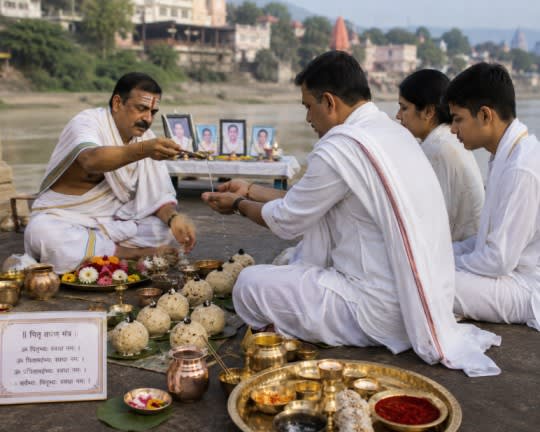
Pitrudosh Puja — also called Pitru Dosha Nivaran Puja or Pitru Shanti Puja — is a ceremony directed toward the Pitru Devatas, the ancestral spirits who, in Hindu belief, continue to influence the welfare of their descendants. The ritual is not reserved for priests or ascetics. Any family member, guided by a qualified pandit, can perform it. The core acts are deceptively simple in description: offering water, sesame seeds, and cooked rice to the ancestors through Tarpan; forming Pindas (rice balls) symbolic of the physical body; and reciting mantras that name and honor the departed. Yet the emotional weight is immense. This is the one ceremony where grief, duty, and hope for the future converge.
The concept of Pitru Dosha itself comes from specific schools of Hindu astrology — it is not universally accepted across all lineages, and beliefs about its causes and remedies vary by region and family tradition. Some households perform this puja annually during Pitru Paksha as a matter of course; others seek it only when an astrologer identifies Pitru Dosha in the horoscope. Either way, the underlying impulse is the same: to settle what remains unsettled between the generations.
This ritual draws on the Garuda Purana and Vayu Purana for its descriptions of ancestral rites and the afterlife journey of the soul, though specific scriptural authority for the term "Pitru Dosha" as an astrological condition is more diffuse and tradition-dependent.
How the Pooja Is Performed
The sequence below follows the traditional structure as preserved in smriti texts and family customs; your assigned pandit will adapt specifics to your sampradaya.
Ceremony Timeline
| Step | What Happens | Approx. Time |
|---|---|---|
| 1. Sankalp | The pandit and family take a vow stating the purpose, names of ancestors, and gotra | 10–15 min |
| 2. Punyahavachan | Purification of the space and participants with mantras and sprinkling of Gangajal | 10 min |
| 3. Kalash Sthapana | Establishment of the Kalash with water, mango leaves, and coconut; invocation of deities | 10 min |
| 4. Tarpan | Offering of water mixed with black sesame seeds and Kusha grass to the ancestors, naming each departed forefather | 20–30 min |
| 5. Pind Daan | Formation and offering of rice-ball Pindas with barley, sesame, and honey to represent the ancestors | 20–30 min |
| 6. Mantra Recitation | Chanting of Om Pitrubhyo Namah, Mahamrityunjaya Mantra, Vishnu Sahasranama, or Pitru Gayatri as per family tradition | 30–45 min |
| 7. Brahmin Bhojan | Feeding of priests or eligible Brahmins — considered an extension of the offering to the ancestors | 30 min |
| 8. Closing Aarti & Prasad | Final prayers, camphor aarti, distribution of prasad; the pandit gives guidance on post-ritual observances | 15 min |
| Total Duration: | Typically 2.5–4 hours depending on number of ancestors and tradition |
Benefits
| Traditionally believed to bring peace and onward progress to departed ancestors, easing their journey in the afterlife |
|---|
| Many families perform this seeking relief from recurring obstacles — health issues, financial instability, or delayed marriages — associated in astrological tradition with unresolved ancestral karma |
| Honoring forefathers is understood to strengthen the spiritual foundation of the household, inviting blessings for harmony and prosperity |
| The ritual is thought to cleanse Pitru Dosha when identified in the horoscope, though interpretations vary by astrologer and lineage |
| Expressing gratitude to ancestors is widely held to deepen family bonds across generations, living and departed |
Benefits Summary Table
| Aspect | Traditionally Associated Benefit |
|---|---|
| Ancestral Peace | Liberation and contentment for departed forefathers |
| Pitru Dosha Nivaran | Reduction of ancestral karmic obstacles per astrological tradition |
| Family Harmony | Blessings for household unity, health, and prosperity |
| Obstacle Removal | Relief from persistent difficulties linked to unresolved ancestral debts |
| Spiritual Continuity | Maintenance of the sacred link between generations |
Who Should Perform This Pooja
| Families observing Pitru Paksha (the 16-day lunar period dedicated to ancestors) |
|---|
| Households on the death anniversary (tithi) of a parent, grandparent, or other ancestor |
| Those who have received astrological guidance identifying Pitru Dosha in the family horoscope |
| Families experiencing repeated, unexplained obstacles — health setbacks, financial drains, relationship difficulties — and seeking traditional remedial rites |
| Individuals who wish to express gratitude to forefathers during Mahalaya Amavasya or Sarva Pitru Amavasya |
| Families preparing for major life milestones (wedding, Griha Pravesh, childbirth) in traditions that require ancestral appeasement first |
Best Days to Perform It
| Pitru Paksha (Shraddha Paksha) — the entire 16-day lunar fortnight in Bhadrapada/Ashwin (typically September–October) is considered most auspicious for ancestral rites |
|---|
| Sarva Pitru Amavasya — the new moon day concluding Pitru Paksha, dedicated to all ancestors whose tithi is unknown |
| Mahalaya Amavasya — especially significant in eastern and southern traditions |
| Monthly Amavasya — for regular observance outside Pitru Paksha |
| The death tithi (anniversary) of the specific ancestor being honored |
Muhurat Disclaimer: Exact muhurat timings for Tarpan and Pind Daan shift year to year based on the Panchang, tithi boundaries, and your location's sunrise/sunset. The dates above are traditional windows, not fixed clock times. Your Naman Puja pandit will confirm the precise muhurat for your booking date and location. Do not rely on generic calendar listings as permanently accurat
Samagri Included
Photos or names of departed ancestors (family to provide; optional per tradition)
☐ Kusha (Darbha) grass
☐ Black sesame seeds (Kala Til)
☐ Akshata (turmeric rice)
☐ Gangajal (holy water)
☐ Kalash with water
☐ White flowers
☐ Sandalwood paste (Chandan)
☐ Kumkum and Haldi (if prescribed by your pandit)
☐ Incense sticks (Agarbatti)
☐ Ghee lamp (Diya)
☐ Camphor (Kapoor)
☐ Fruits
☐ Coconut
☐ Betel leaves and betel nuts
☐ Cooked rice
☐ Barley (Jau)
☐ Wheat flour (for Pind, where applicable)
☐ Milk
☐ Curd
☐ Honey
☐ Ghee
☐ Sugar
☐ White cloth (if required by tradition)
☐ Dakshina for the pandit
☐ Food for Brahmin bhojan (where customary)
☐ Items for Pind Daan and Tarpan (as guided by the priest)
Preparing for the Pooja
| Clean the space: Thoroughly clean the area where the ritual will be performed; ancestral rites are traditionally conducted in a quiet, respectful setting |
|---|
| Altar direction: East or north-facing is generally preferred; your pandit will confirm based on your home layout and tradition |
| Attire: White or light-colored traditional clothing; avoid black or overly bright colors |
| Fasting: Some families observe a light fast or abstain from non-vegetarian food on the day of the ritual — follow your pandit's guidance |
| Ancestor details: Prepare the names and gotra of departed forefathers you wish to include in the Sankalp; unclear lineage details can be discussed with your pandit beforehand |
| Emotional readiness: Unlike celebratory pujas, this rite carries grief. Allow space for that. |
Dos and Don'ts
Do
| Arrive or be ready on time — muhurat adherence matters for Tarpan |
|---|
| Have ancestor names and gotra written down and ready for the Sankalp |
| Maintain a quiet, reverent atmosphere throughout |
| Follow your pandit's guidance on Pind Daan specifics — the form and number of Pindas vary by lineage |
| Offer Brahmin bhojan if it is part of your family custom |
Don't:
| Perform the ritual in a rushed or distracted manner |
|---|
| Use broken, damaged, or stale samagri items |
| Consume alcohol or non-vegetarian food on the day of the puja (per most traditions) |
| Treat this as a transactional "fix" for Pitru Dosha without understanding its devotional dimension |
| Skip the post-ritual guidance your pandit provides — observances in the days following matter too |
Regional Traditions Disclaimer
Pitrudosh Puja is perhaps the most regionally variable of all major Hindu rituals. In North India, the emphasis may fall heavily on Pind Daan at Gaya or home-based Tarpan with specific sesame-and-water formulas. In Maharashtra and Gujarat, the sixteen shraddhas of Pitru Paksha follow a strict tithi-by-tithi calendar. In Tamil and Telugu households, the ritual may integrate Mahalaya Tarpanam with distinct mantras and offering sequences. Bengali tradition observes Tarpan during Mahalaya with unique customs. The form of the Pinda, the direction of offering, the inclusion of Vishnu or Shiva mantras, and even the eligibility of women to perform certain acts — all of this shifts across sampradayas. Naman Puja's pandits are instructed to ask about your family's specific tradition at the time of booking and adapt the sequence, samagri, and mantras accordingly. What you read here is a general framework, not the only right way.
Online Pooja vs. At-Home Pooja
| Online Pooja | At-Home Pooja | |
|---|---|---|
| Where it happens | Live-streamed from the pandit's ritual space or a sacred location (Gaya, Varanasi, etc.) | At your residence, arranged by the pandit on arrival |
| Your role | Participate via video, provide ancestor names for Sankalp, witness Tarpan and mantras live | Full physical participation; you perform offerings alongside the pandit |
| Samagri | Pandit arranges all items at his end; you may keep a simple altar with photo of ancestors | Complete samagri kit brought by pandit — Kusha grass, sesame, Pind materials, Gangajal, etc. |
| Prasad | Shipped to your address post-ritual (where applicable) | Distributed immediately after the ceremony |
| Best for | Families living abroad, those unable to travel, or households seeking Gaya/Varanasi-based Pind Daan without the journey | Families wanting the full immersive experience, those with elder members who prefer home rituals, or traditions requiring physical Pind Daan by the family |
Frequently Asked Questions
Common queries about booking and performing this sacred ritual in .
Eligibility varies by family tradition. In many lineages, the eldest son or male family member performs the primary Tarpan and Pind Daan. In others, daughters or wives may participate fully. Your Naman Puja pandit will guide you based on your specific sampradaya. There is no universal rule — only the rule of your tradition.