Secure Payment
Video Proof
Prasad Delivery
Certified Vedic Pandits
Why Book with Naman Puja
• Verified Vedic Pandits trained in authentic Rudrabhisheka and Shiva worship traditions.
• Online and At-Home Booking Options to suit families across India and abroad.
• Complete Puja Samagri arranged according to the selected Rudrabhisheka ritual.
• Transparent Pricing with no hidden costs or last-minute surprises.
• Dedicated Assistance before, during, and after the puja to ensure a seamless experience.
• Live Sankalp Participation for online bookings, allowing devotees to join the ceremony from anywhere.
• Authentic Vedic Rituals performed according to traditional Shaivite practices and guided by experienced pandits
What Is Rudrabhisheka?
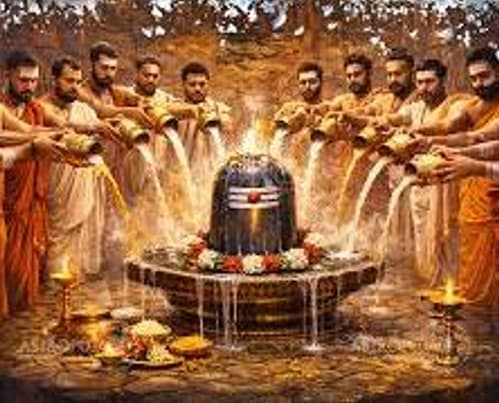
Rudrabhisheka is a sacred Vedic ritual dedicated to Lord Shiva, in which the Shiva Linga is ceremonially bathed with Ganga Jal, Panchamrit, milk, honey, Bilva leaves, flowers, and other sacred offerings while the Sri Rudram (Namakam), Chamakam, and Om Namah Shivaya are chanted. Rooted in the Krishna Yajur Veda, this ritual is traditionally performed to worship Lord Shiva with devotion and seek His divine blessings.
Rudrabhisheka can be performed in temples or at home under the guidance of a qualified Vedic pandit. Many devotees choose this puja during Shravan Maas, Mondays, Pradosh Vrat, Maha Shivaratri, as well as on occasions such as birthdays, anniversaries, housewarming ceremonies, or before beginning a new venture. Naman Puja offers both online and at-home Rudrabhisheka with experienced pandits, complete puja samagri, and end-to-end assistance for a traditional and hassle-free experience.
How the Puja Is Performed
Rudrabhisheka follows a structured sequence of Vedic rituals centered on the worship of Lord Shiva through the ceremonial Abhishekam of the Shiva Linga. The ceremony is traditionally accompanied by the chanting of Sri Rudram (Namakam) and Chamakam from the Krishna Yajur Veda, making it one of the most spiritually significant forms of Shiva worship. Depending on the family's tradition and the purpose of the puja, the pandit may also include Maha Mrityunjaya Mantra, Panchakshari Mantra (Om Namah Shivaya), Shiva Archana, or other Vedic prayers.
When you book through Naman Puja, our experienced Vedic pandits follow the traditional ritual sequence while guiding the family through every stage of the ceremony.
| Step | What Happens |
|---|---|
| Purification & Sankalp | The ceremony begins with Achaman (ritual purification), followed by Ganesh Vandana and Sankalp, where the devotee's name, gotra, family details, and purpose of the Rudrabhisheka are formally declared before Lord Shiva. |
| Kalasha Sthapana | A sacred Kalasha is established and invoked to symbolize divine presence before the commencement of the main Shiva worship. |
| Invocation of Lord Shiva | Lord Shiva, Goddess Parvati, Lord Ganesha, Nandi, and other associated deities are respectfully invoked through Vedic mantras and traditional prayers. |
| Rudrabhisheka (Sacred Abhishekam) | The Shiva Linga is ceremonially bathed with Ganga Jal, milk, curd, honey, ghee, sugar, Panchamrit, coconut water, sandalwood paste, and other sacred offerings while Sri Rudram (Namakam) is chanted. |
| Bilva Archana | Fresh Bilva (Bel) leaves, flowers, fruits, Vibhuti, and other offerings are presented while chanting "Om Namah Shivaya" and Shiva Ashtottara Namavali. |
| Chamakam & Maha Mrityunjaya Mantra | Chamakam and the Maha Mrityunjaya Mantra are recited, praying for spiritual well-being, inner strength, peace, and divine blessings according to Vedic tradition. |
| Maha Aarti & Prasad | Maha Aarti & Prasad The ceremony concludes with Shiva Aarti, final prayers, blessings from the pandit, and distribution of Prasad among the devotees. |
| Duration | Approximately 90–120 minutes, depending on the number of Rudram recitations and any additional rituals included in the booking. |
Benefits
Rudrabhisheka has been performed for centuries as an act of devotion to Lord Shiva. While Hindu scriptures and Shaivite traditions describe numerous spiritual benefits associated with this sacred ritual, these are matters of faith and should be understood as traditional beliefs rather than guaranteed outcomes. Devotees perform Rudrabhisheka primarily to express devotion, cultivate inner peace, and seek Lord Shiva's blessings during important stages of life.
Deepens Spiritual Connection
The chanting of Sri Rudram, Chamakam, and Om Namah Shivaya encourages devotees to focus on prayer, meditation, and self-reflection. Many families perform Rudrabhisheka to strengthen their spiritual connection with Lord Shiva and cultivate a sense of inner calm.
Traditionally Believed to Promote Peace and Harmony
Many devotees perform Rudrabhisheka seeking blessings for peace within the home, harmonious relationships, and emotional well-being. The ritual provides an opportunity for families to come together in collective prayer and devotion.
Prayers for Health and Well-being
The recitation of the Maha Mrityunjaya Mantra, often included during Rudrabhisheka, is traditionally associated with prayers for health, resilience, and spiritual strength during difficult times. Devotees seek Lord Shiva's grace for themselves and their loved ones through sincere worship.
Seeking Strength During Life's Challenges
Whether beginning a new chapter in life, facing professional responsibilities, or navigating personal challenges, many devotees perform Rudrabhisheka with prayers for wisdom, courage, and the ability to overcome obstacles through Lord Shiva's blessings.
Expression of Gratitude
Rudrabhisheka is not performed only during times of difficulty. Many families choose this sacred ceremony simply to express gratitude for life's blessings, celebrate important milestones, or deepen their regular devotional practices.
Spiritual Purification
According to Shaivite traditions, Abhishekam performed with devotion symbolizes the purification of the mind and heart. The ritual encourages humility, surrender, and mindfulness while reminding devotees of Lord Shiva's teachings on transformation and detachment.
Who Should Book This Puja
Rudrabhisheka may be performed by any devotee who wishes to worship Lord Shiva with faith and devotion. It is not limited to specific communities, life stages, or occasions. Whether performed individually or with family members, the ceremony provides an opportunity to seek Lord Shiva's blessings through traditional Vedic worship.
Many families choose Rudrabhisheka during occasions such as:
• Shravan Maas, especially on Shravan Mondays dedicated to Lord Shiva.
• Maha Shivaratri, one of the holiest festivals in the Shaivite tradition.
• Pradosh Vrat, observed twice every lunar month and traditionally associated with Shiva worship.
• Masik Shivaratri, observed every month as an auspicious day for Lord Shiva.
• Birthdays and wedding anniversaries as an offering of gratitude and blessings.
• Housewarming ceremonies (Griha Pravesh) to seek divine blessings for a new home.
• Business inaugurations or the beginning of a new professional journey.
• Before important examinations, career milestones, or major life decisions, seeking clarity and strength through prayer.
• Family gatherings and annual Shiva worship, especially during Shravan or other auspicious periods.
Whether performed on a festival, during an important milestone, or simply as an act of devotion, Rudrabhisheka offers devotees an opportunity to worship Lord Shiva according to time-honoured Vedic traditions.
Best Days to Perform Rudrabhisheka
Rudrabhisheka can be performed on any day with sincere devotion. However, Hindu traditions recognize certain days and occasions as particularly auspicious for worshipping Lord Shiva. Many devotees choose these dates based on the Hindu Panchang, family customs, or guidance from their Vedic pandit.
Mondays (Somvar)
Monday is traditionally dedicated to Lord Shiva and is considered one of the most preferred days for performing Rudrabhisheka. Devotees often observe Somvar Vrat and combine it with Shiva worship.
Shravan Maas
The holy month of Shravan holds special significance in Shaivite traditions. Shravan Mondays are especially popular, with devotees across the world performing Rudrabhisheka and offering Bilva leaves, water, and Panchamrit to the Shiva Linga.
Maha Shivaratri
Celebrated annually, Maha Shivaratri is regarded as the most important festival dedicated to Lord Shiva. Performing Rudrabhisheka on this day is considered highly auspicious and attracts devotees from around the world.
Pradosh Vrat
Observed on the Trayodashi Tithi during both lunar fortnights, Pradosh Vrat is traditionally associated with Lord Shiva. Many devotees perform Rudrabhisheka during Pradosh to offer prayers and seek divine blessings.
Masik Shivaratri
Masik Shivaratri is observed every lunar month and is another favourable occasion for Rudrabhisheka, especially for devotees who regularly worship Lord Shiva.
Personal Auspicious Occasions
Many families also schedule Rudrabhisheka on birthdays, anniversaries, Griha Pravesh ceremonies, business inaugurations, or other significant milestones. Choosing a suitable Muhurat based on the local Panchang and the guidance of the officiating pandit helps ensure that the ceremony aligns with family traditions and personal preferences.
Samagri Included
Every offering used during Rudrabhisheka carries symbolic significance in Shaivite tradition. The sacred Abhishekam is performed using pure and sattvic items that represent devotion, gratitude, and reverence towards Lord Shiva. When you book your Rudrabhisheka through Naman Puja, our experienced Vedic pandits ensure that the required puja samagri is arranged according to the selected ritual and traditional practices.
The standard Rudrabhisheka samagri includes:
• Shiva Linga (where required for the ceremony)
• Kalasha with coconut and mango leaves
• Ganga Jal or purified water for Abhishekam
• Panchamrit (milk, curd, honey, ghee, and sugar)
• Fresh Bilva (Bel) leaves, one of the most sacred offerings to Lord Shiva
• Fresh flowers and garlands
• Sandalwood paste (Chandan)
• Vibhuti (Sacred Ash)
• Akshata (turmeric-coated rice)
• Incense sticks (Agarbatti)
• Camphor (Kapoor)
• Oil or ghee lamps (Deepam)
• Fresh fruits
• Coconut
• Betel leaves and betel nuts
• Sacred thread (Kalava)
• Naivedyam (food offering)
• Prasad for distribution after the puja
Depending on the type of Rudrabhisheka and regional traditions, the pandit may also recommend additional offerings such as tender coconut water, sugarcane juice, fruit juices, herbal extracts, lotus flowers, white flowers, or specific seasonal offerings. If you choose an at-home Rudrabhisheka, our team will guide you regarding any additional items required before the ceremony.
Preparing for the Puja
Preparing your home before Rudrabhisheka helps create a peaceful atmosphere for worship and allows the ceremony to proceed smoothly. While the officiating pandit guides every step of the ritual, a few simple arrangements beforehand ensure that the family can participate comfortably without interruptions.
Before the Ceremony
• Thoroughly clean the prayer area and surrounding space.
• Select a quiet place where the family can comfortably participate throughout the puja.
• If possible, arrange the altar facing East or North, following traditional Vastu recommendations.
• Keep a clean wooden platform or altar ready for the Shiva Linga and Kalasha.
• Ensure adequate lighting and ventilation around the puja area.
• Keep sufficient seating arrangements for elderly family members.
Personal Preparation
• Bathe before the ceremony and wear freshly washed traditional attire.
• White, saffron, yellow, or light-coloured clothing is generally preferred.
• Follow a sattvic diet before the puja. Many devotees choose to avoid onion, garlic, alcohol, and non-vegetarian food on the day of the ceremony.
• If observing a fast, follow your family's tradition or the guidance of the officiating pandit.
• Keep mobile phones on silent mode to maintain a peaceful environment.
During the Puja
• Be present before the Sankalp begins.
• Participate actively in the chanting whenever possible.
• Follow the pandit's instructions throughout the ceremony.
• Maintain silence and avoid unnecessary conversations during the Vedic recitations.
• Remain seated during the important stages of the Abhishekam unless instructed otherwise.
Dos and Don'ts
Do
• Offer fresh Bilva leaves with devotion.
• Use clean and fresh flowers for worship.
• Participate sincerely in the Sankalp.
• Listen attentively during the chanting of Sri Rudram, Chamakam, and the Maha Mrityunjaya Mantra.
• Maintain cleanliness around the altar throughout the ceremony.
• Accept Prasad respectfully and distribute it among family members and guests.
• Seek blessings from the pandit after the completion of the Aarti.
Don't
• Offer dry, damaged, or insect-eaten Bilva leaves.
• Consume alcohol or non-sattvic food before participating in the puja.
• Interrupt the Abhishekam or Vedic chanting unnecessarily.
• Leave the ceremony midway without a genuine reason.
• Keep footwear or unrelated household items near the altar.
• Rush through the rituals or treat the ceremony as a mere formality.
Muhurat & Auspicious Timings for Rudrabhisheka
The ideal Muhurat for Rudrabhisheka depends on your city, date, and the Hindu Panchang. Factors such as Tithi, Nakshatra, Yoga, Karana, and local sunrise and sunset timings all influence the most appropriate time for performing the ritual. Since these calculations vary by location, the Muhurat for Rudrabhisheka in New York may differ from that in Dallas, Toronto, London, Sydney, Singapore, or Dubai.
In Shaivite traditions, the following occasions are especially significant for Rudrabhisheka:
• Mondays (Somvar)
• Shravan Mondays
• Pradosh Vrat
• Masik Shivaratri
• Maha Shivaratri
Many devotees also choose an auspicious Muhurat based on family traditions, the purpose of the puja, or the recommendation of a qualified Vedic pandit.
Rahu Kaal and Rudrabhisheka
According to traditional Hindu beliefs, many devotees prefer not to begin auspicious ceremonies during Rahu Kaal. However, if the puja has already commenced before Rahu Kaal, or if the officiating Vedic pandit recommends a specific Muhurat based on the Panchang and Sankalp, that guidance should be followed.
Rahu Kaal is one of several Panchang considerations and should not be viewed in isolation. A qualified pandit considers the overall Panchang, including Tithi, Nakshatra, Yoga, and the devotee's preferences before recommending the most suitable Muhurat.
City-wise Muhurat Guidance
The exact Muhurat varies according to your location because sunrise and sunset timings differ across cities. When booking your Rudrabhisheka with Naman Puja, simply provide your city and preferred date. Our team will help coordinate a suitable Muhurat based on the local Panchang and the traditions followed by the officiating pandit.
Online Rudrabhisheka vs. At-Home Rudrabhisheka
| Online Rudrabhisheka At-Home Rudrabhisheka | Online Rudrabhisheka At-Home Rudrabhisheka |
|---|---|
| Where it happens | Where it happens Performed by a Vedic pandit from a temple or designated puja location and streamed live |
| Your role | Your role Join the Sankalp and witness the ceremony through a secure live video session |
| Samagri | Arranged by the pandit for the online ceremony |
| Prasad | Delivered after the ceremony where service is available |
| Best for | Devotees living abroad, senior citizens, busy professionals, and families unable to host the ceremony |