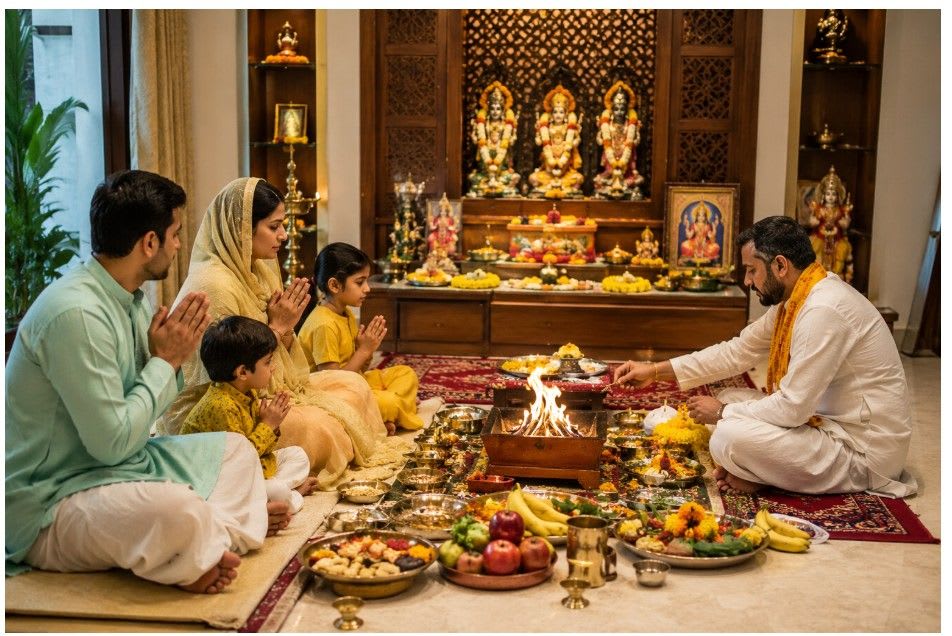
Lord Shiva At Home & Online
Rudrabhisheka Puja
A powerful Vedic ritual of bathing the Shiva Linga with sacred substances while chanting the Rudram, for health, peace and removal of negativity.
Duration: 3 Hrs
Secure Payment
Video Proof
Prasad Delivery
Certified Vedic Pandits
Rudrabhishek Puja in San Jose, California
Rudrabhishek Puja is one of the most sacred Vedic rituals dedicated to Lord Shiva, performed to seek divine blessings for health, prosperity, spiritual growth, peace, and the removal of obstacles. During the ceremony, the Shiva Lingam is ceremonially bathed with sacred offerings such as milk, water, honey, curd, ghee, Panchamrit, and Bilva leaves while powerful Vedic mantras, including the Shri Rudram and Om Namah Shivaya, are chanted to invoke Lord Shiva's grace. Rudrabhishek Puja is especially auspicious on Mahashivratri, Mondays, Pradosham, Shravan (Sawan) month, and Masik Shivratri, as well as during housewarming ceremonies, new business ventures, birthdays, anniversaries, and other important life milestones.
Families across San Jose and the Bay Area can book an authentic Rudrabhishek Puja in San Jose with experienced Vedic pandits through Naman Pooja. Whether you prefer a home puja or a temple puja, we arrange verified Vedic priests, complete puja samagri, and personalized guidance to ensure every ritual is performed according to traditional Vedic practices. Our seamless booking process makes it easy for individuals and families to participate in a spiritually enriching Rudrabhishek ceremony with devotion and peace of mind.
Best Dates for Rudrabhishek Puja in San Jose (2026)
Planning a Rudrabhishek Puja in San Jose? While Lord Shiva can be worshipped on any day with devotion, certain occasions are considered especially auspicious for performing Rudrabhishek. Mondays, Pradosham, Mahashivratri, Masik Shivratri, and the holy month of Shravan (Sawan) are among the most favorable times to seek Lord Shiva's blessings for health, peace, prosperity, spiritual growth, and the removal of obstacles.
The calendar below highlights the major auspicious dates for Rudrabhishek Puja in 2026 according to the San Jose time zone, helping you choose the most suitable day for your puja.
| Occasion | Recommended Dates (2026) |
|---|---|
| Mahashivratri | 15 February 2026 |
| Monthly Shivratri (Masik Shivratri) | 17 Jan, 15 Feb, 17 Mar, 15 Apr, 15 May, 13 Jun, 13 Jul, 11 Aug, 10 Sep, 9 Oct, 8 Nov, 7 Dec |
| Pradosham Vrat | Twice every lunar month (Shukla & Krishna Paksha Trayodashi) – Auto-update based on the San Jose (America/Los_Angeles) Panchang |
| Mondays (Somvar) | Every Monday throughout the year |
| Shravan Month | 30 July 2026 – 28 August 2026 |
Timing to Avoid: Rahu Kaal for Rudrabhishek
Rahu Kaal is a daily period that is traditionally considered inauspicious for beginning important or sacred activities, including Rudrabhishek Puja. Since Rahu Kaal is calculated based on the local sunrise and sunset, its timing changes every day and varies by city and season.
Before confirming your Rudrabhishek Puja booking, check the daily Panchang below for the current Rahu Kaal in San Jose and schedule your puja outside this time for an auspicious beginning.
| Day | Date | Rahu Kaal Start | Rahu Kaal End | Duration | Location |
|---|---|---|---|---|---|
| Monday | 17 August 2026 | 08:07 AM | 09:48 AM | 01 Hour 41 Minutes | San Jose, California, USA |
🕉️ Choose Your Rudrabhishek Experience:
👉 Book Rudrabhishek Online — Participate in a high-definition interactive live Rudrabhishek with a personalized Sankalp performed in your name.
👉 Book Rudrabhishek at Home — Invite an experienced, verified Vedic Pandit to perform the sacred Rudrabhishek at your home with complete puja samagri.
Rudrabhishek Puja at Home in San Jose
Naman Pooja brings the complete Rudrabhishek Puja experience to your home, anywhere in San Jose and the South Bay.
| Backyard puja setup available in suburban areas like Cupertino and Campbell, weather permitting |
|---|
| Apartment residents can book their clubhouse or community room instead |
| Experienced priest conducts the Rudrabhishek rituals and Vedic mantras |
| Complete puja setup with Shiva Lingam, flowers, bilva leaves, milk, water, fruits, and other sacred offerings |
| Video call included for remote family members to participate in the puja |
Dos and Don'ts
| Don't use open flames or charcoal on balconies—most apartment complexes restrict them; use electric lamps instead |
|---|
| Do book 2–3 weeks ahead, especially around Mondays, Mahashivratri, and other auspicious dates |
| Do keep an indoor backup plan for pujas during San Jose's winter rains (Dec–Feb) |
| Do check with your apartment or community management regarding any restrictions on religious ceremonies and offerings |
Samagri and Prasad Responsibility
For a home Rudrabhishek Puja, the family is generally responsible for arranging the following items:
| Fresh items: 5 varieties of fruit, 2 bunches of flowers, 1 bunch of bilva (bel) leaves, and 2 coconuts |
|---|
| Abhishek items: milk, yogurt, honey, ghee, sugar, water, and Panchamrit ingredients |
| Ritual items: 15–20 betel leaves, betel nuts, 21 coins, incense, camphor, and other basic puja essentials |
| For the Shiva Lingam: flowers, bilva leaves, sandalwood paste, and other traditional offerings as advised by the priest |
For a temple Rudrabhishek, the temple generally provides the main altar setup, Shiva Lingam, kalash, lamps, and Prasad, so you are not expected to bring these items yourself.
A useful local note: bilva leaves, betel leaves, and other traditional puja samagri can be difficult to find at standard American supermarkets. Many San Jose families visit Indian grocery stores such as India Cash & Carry or Patel Brothers for fresh puja essentials.
Serviceable Area
Naman Pooja currently covers a 25 to 45 mile radius around San Jose, including the greater South Bay, Santa Clara, Sunnyvale, Cupertino, and Campbell, and extending into parts of the East Bay such as Fremont and Milpitas.
If your area is not listed here, please contact us to check availability, as our service coverage is expanding regularly.
Frequently Asked Questions
Common queries about booking and performing this sacred ritual in .
Generally, it depends on your apartment or community rules. Open flames may be restricted on balconies and patios. An electric lamp or a small permitted diya can be a safer alternative. Many families also choose to use their apartment clubhouse or community room for a more comfortable puja setup.